Seal Cracks Before Water Reaches the Base
Hot Tar Crack Filling in Shoemakersville and Wyomissing, PA, for surface cracks that threaten pavement integrity
Father & Sons Asphalt LLC offers hot tar crack filling to property owners in Shoemakersville and Wyomissing, PA, who need to stop water infiltration before it causes base failure. You may see thin cracks running across your driveway or wider splits forming along the edges of your parking lot. These openings allow water to seep beneath the asphalt, and in Pennsylvania's freeze-thaw climate, that water expands when it freezes, breaking apart the base and turning small cracks into potholes or sunken sections.
Hot tar crack filling seals these surface cracks with heated rubberized material that stays flexible as the pavement expands and contracts with temperature changes. The process prevents water from reaching the base layer and extends the structural life of your asphalt without the cost of resurfacing. It works best as seasonal maintenance, applied before winter or after a wet spring when cracks are most likely to worsen.
If you notice cracks widening or water pooling along splits in your asphalt, contact Father & Sons Asphalt LLC to schedule crack filling and protect your pavement before the damage becomes more expensive to repair.
How Hot Tar Crack Filling Protects Pavement
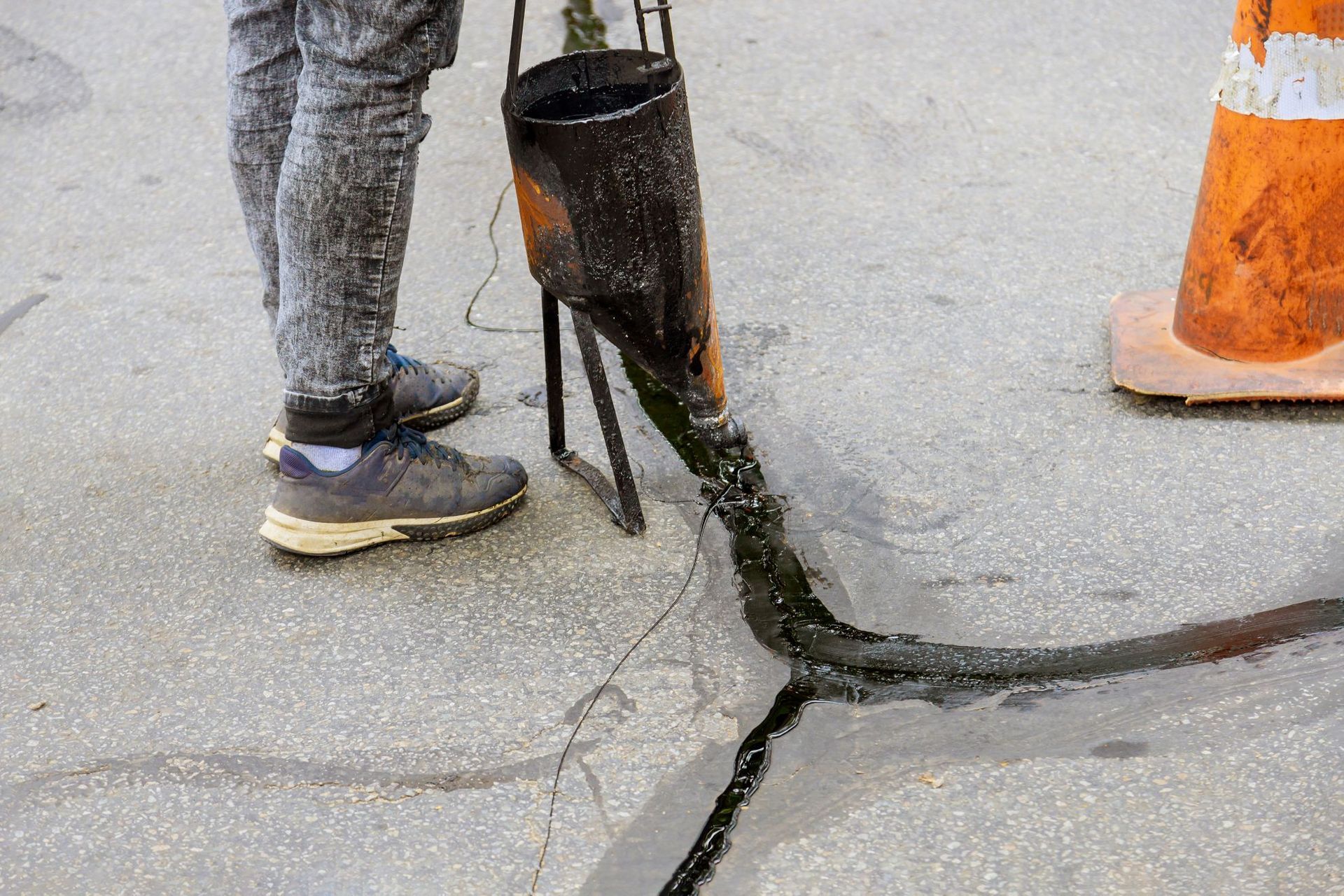
When you schedule crack filling, the cracks are cleaned of debris and vegetation, then hot rubberized tar is poured or applied directly into the opening. The material flows into the crack and bonds to the asphalt on both sides, creating a waterproof seal that flexes with seasonal movement and prevents further separation.
After the work is finished, you will see sealed cracks that no longer collect water or debris, and the pavement around those cracks stops expanding outward. Father & Sons Asphalt LLC often pairs crack filling with sealcoating to provide complete protection, since sealcoating preserves the surface while crack filling protects the structural layers beneath.
Crack filling does not repair damage that has already compromised the base. If the pavement has sunken or developed potholes, patching or milling may be required first. This service works best when applied early, before water infiltration causes secondary damage. Regular maintenance every few years keeps your asphalt in good condition and delays the need for more invasive repairs.
Common Questions About Crack Filling
Homeowners and commercial property managers in Shoemakersville and Wyomissing, PA, often ask when cracks should be filled, how long the seal lasts, and whether this service prevents future cracking.
What size cracks should be filled?
Cracks wider than a quarter inch should be filled, as they allow enough water infiltration to damage the base, while hairline cracks are typically addressed with sealcoating instead.
How long does hot tar crack filling last?
The seal typically lasts two to four years depending on traffic, weather, and how well the crack was cleaned before application, though some movement or separation may occur over time.
Why is hot tar used instead of cold pour crack filler?
Hot tar bonds more effectively to asphalt and remains flexible in freezing temperatures, which matters in Shoemakersville and Wyomissing, PA, where winter conditions are harsh and prolonged.
When is the best time to fill cracks?
Spring and fall are ideal because the asphalt is neither too hot nor too cold, and the cracks are at a stable width, allowing the material to cure properly before extreme weather arrives.
Does crack filling prevent new cracks from forming?
It stops existing cracks from expanding and prevents water damage beneath them, but it does not prevent new cracks that form due to age, traffic, or settling over time.
Father & Sons Paving inspects your asphalt to identify cracks that need immediate attention and those that can wait. Schedule crack filling as part of your regular pavement maintenance to keep water out and avoid costly base repairs down the road.